Every recruiter has had this moment.
A new role lands in your inbox and, within about thirty seconds, you know whether it feels like a pleasure or a grind. Not because the salary is huge. Not because the brand is famous. Just because some roles have shape. They make sense quickly. You can picture who would do them well. You can already hear how you would explain the opportunity to a strong candidate.
That is the bit people outside recruitment do not always see. Recruiters are not only reacting to job titles. They are reacting to how believable the search feels.
The irony is that the roles recruiters enjoy most are usually the roles candidates respond to best as well. Clearer story. Better process. Better timing. Better chance of a sensible outcome. That is not just instinct. CIPD’s 2024 research says employers have been investing in employer brand and candidate experience, while Greenhouse’s 2024 data shows UK candidates favour efficient interview processes and expect prompt communication early in the application journey.
A role does not have to be easy to be enjoyable
The roles recruiters love are rarely the ones with no challenge. In fact, some of the best searches are difficult on paper. Niche market. High bar. Competitive talent pool. Real commercial pressure.
What makes them enjoyable is something else: the search feels coherent.
There is a hiring manager who can explain why the role exists. The brief sounds like it belongs to this company, not like it was copied from three old job descriptions. The expectations are ambitious but still recognisable. A recruiter can work with that. It gives the search energy.
Recruiters love a role with a believable story
A believable story beats a glossy one.
Candidates do not need every company to sound world-changing. They need it to sound real. What is the team trying to build? Why now? Why this hire? Why would a smart person leave a decent role to join?
When recruiters like working a role, it is often because they can answer those questions cleanly. That matters because candidate decisions are shaped by more than compensation. Greenhouse’s 2024 research found that 80% of UK candidates say a company’s culture and external brand influence their decision to apply.
A recruiter can feel the difference between a role that has genuine pull and one that needs constant decoration.
Good roles sound specific
There is something very attractive about a role that knows what it is.
Not overly engineered. Not full of buzzwords. Just specific.
The best briefs usually have a few steady qualities. The scope is clear enough to explain in one go. The line manager knows what success looks like in six to twelve months. The package is not introduced like a magic trick. The process is visible. The trade-offs are admitted early.
That kind of specificity helps everyone. CIPD’s 2024 report notes that employers are still putting real effort into attraction strategy, including employer brand and candidate experience, because quality attraction is no longer just about broadcasting a vacancy.
Momentum is more attractive than prestige
This is the part many people underestimate.
Recruiters often prefer a good search at a lesser-known company over a vague one at a famous business. Momentum is a huge part of that. A role becomes enjoyable when the search can actually move.
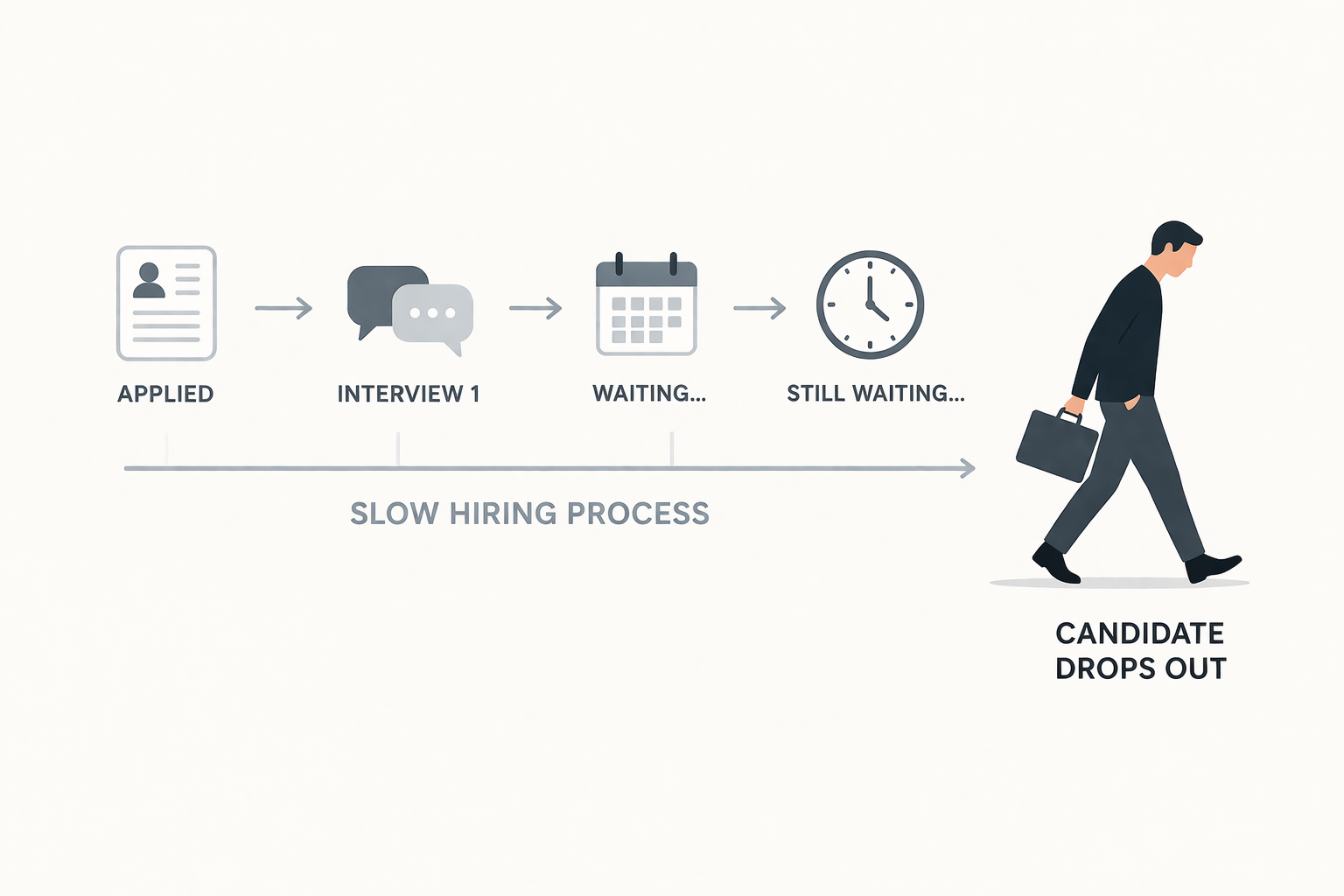
Greenhouse’s 2024 candidate data found that 65% of UK candidates would prefer just one to two interview stages, and 88% expect to hear back within the first two weeks after applying.
That does not mean every process has to be ultra-short. It means drift is unattractive. Recruiters know that once a process starts feeling foggy, the role becomes harder to represent well. The search loses rhythm. Candidate confidence softens. Even good opportunities start to feel less convincing than they really are.
Recruiters love working with people who know how to decide
This is not quite the same as speed.
Some hiring teams move quickly and still create confusion. Others are measured but decisive. Recruiters usually prefer the second type. What they want is confidence that the people involved know how they make choices.
That confidence changes the tone of the search. It means feedback is useful. Calibrations are real. New information sharpens the process rather than resetting it. The role becomes easier to carry into the market because the recruiter is not translating mixed signals every few days.
The best roles usually have candidate appeal built in
A recruiter enjoys a role more when they do not have to oversell it.
That does not mean the job must be glamorous. Plenty of solid, operational, unflashy roles are a joy to work on. But there has to be something a good candidate can genuinely care about. Better scope. Better manager. Better timing. Better mission. Better flexibility. Better learning curve.
CIPD’s 2024 report says corporate websites, internal talent pools and recruitment/search consultants remain among the most effective attraction methods, which is a useful reminder that strong hiring still depends on how clearly the opportunity is positioned, not just where it is posted.
When recruiters love a role, it is often because the appeal is already there. Their job is to articulate it, not invent it.
What recruiters really mean when they say a role is “good”
Usually, they mean one of four things.
The role is clear.
The story is credible.
The process has momentum.
The people involved make sensible decisions.
That is it.
Not every enjoyable search is perfectly run. Not every good role is easy to fill. But the ones recruiters genuinely like tend to feel aligned from the start. That alignment makes them easier to explain, easier to defend and easier to keep alive in the market.
The roles recruiters secretly love working on are not necessarily the highest paid, the best known or the easiest to fill. They are the ones that feel real. They come with enough clarity to position well, enough credibility to attract serious candidates and enough momentum to avoid wasting everybody’s time.
That is why these searches often perform better. The same ingredients that make a role enjoyable for a recruiter also make it more attractive to candidates.
For hiring teams, this is the useful question: would a recruiter enjoy representing this role, or merely agree to work on it?
If you want the search to feel stronger in the market, focus on the things that make a role easy to believe in. Sharpen the story. Be honest about the trade-offs. Keep the process visible. Make sure the hiring manager can explain the hire in plain English. And give the recruiter something real to stand behind.
For recruiters, there is a quieter takeaway too. Paying attention to which roles you naturally enjoy is not fluff. It is pattern recognition. Over time, it teaches you what good searches are made of.
A good search has a feel to it.
Not a glamorous feel. Not a loud one. Just a sense that the role is clear, the company means it and the process has a pulse.
Those are the roles recruiters love. Not secretly because they are being precious, but because they know what happens next. Better conversations. Better candidate engagement. Better odds of a hire everyone can live with.
And usually, that instinct is right.
If your roles are strong but not landing the way they should, it is often worth looking at how the search is being framed, not just how widely it is being pushed. Better representation tends to start with a better brief.
- CIPD, Resourcing and Talent Planning Report 2024. Key points used: 81% of organisations took action to improve employer brand; candidate experience and attraction strategy remain active priorities; corporate websites, internal talent pools and recruitment/search consultants remain among the most effective attraction methods.
- Greenhouse, Candidate Experience Report 2024. Key points used: 65% of UK candidates prefer one to two interview stages; 88% expect to hear back within two weeks of applying; 80% say company culture and external brand influence their decision to apply.